
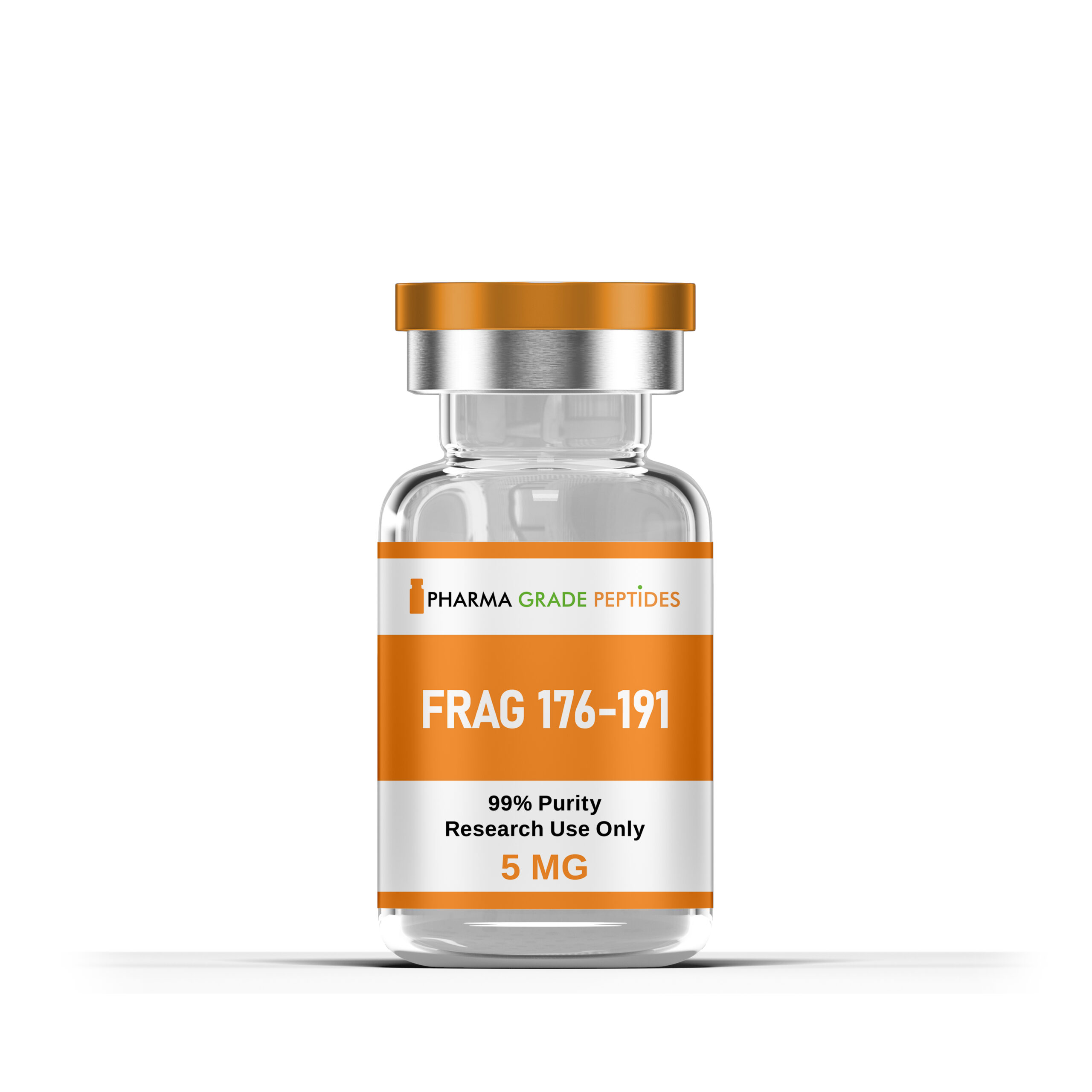
HGH Fragment 176-191 5mg – Premium Research Grade
Human Growth Hormone C-Terminal Fragment | Lipid Metabolism Research Compound | ≥99% Purity | HPLC-Tested | Lyophilized Powder
Product Overview
HGH Fragment 176-191 is a synthetic peptide corresponding to amino acids 176–191 of the human growth hormone (hGH) sequence — specifically the C-terminal region of the hGH molecule responsible for its lipolytic activity. This 5mg research-grade formulation provides laboratories with a high-purity, HPLC-verified compound for investigating lipid metabolism pathways, adipocyte signalling mechanisms, beta-3 adrenergic receptor interactions, and the isolated lipolytic activity of the growth hormone C-terminal domain in controlled experimental models.
The significance of Fragment 176-191 as a research compound lies in its ability to isolate the lipid-regulating activity of hGH from its growth-promoting effects. Full-length hGH activates IGF-1 signalling pathways that drive cellular growth and proliferation alongside its metabolic effects. Fragment 176-191 retains the C-terminal lipolytic domain while removing the N-terminal region responsible for IGF-1R activation — providing researchers with a clean tool for studying hGH-mediated lipid metabolism without the confounding growth-promoting signals of the complete hormone.
What is HGH Fragment 176-191 and Why is it Researched?
The lipolytic activity of human growth hormone has been extensively studied since the 1980s. Early research established that the C-terminal region of hGH — particularly the helical domain spanning residues 176-191 — was responsible for the hormone’s fat-mobilising effects, while the N-terminal region drove its growth-promoting IGF-1-dependent activity.
Fragment 176-191 was developed as a research tool to investigate this C-terminal lipolytic domain in isolation. By removing the growth-promoting N-terminal sequence, researchers can study how the hGH C-terminal domain interacts with adipocyte signalling pathways, beta-adrenergic receptors, and lipid metabolism cascades without the anabolic and mitogenic effects that complicate studies using full-length hGH. This clean mechanistic separation makes Fragment 176-191 one of the most useful tools in metabolic and adipose tissue research.
Mechanism of Action
HGH Fragment 176-191 exerts its research-relevant biological activity through targeted adipocyte signalling:
Beta-3 Adrenergic Receptor Interaction — Research suggests Fragment 176-191 interacts with beta-3 adrenergic receptors expressed on adipocytes, mimicking aspects of the lipolytic signalling initiated by full-length hGH in fat cells. Beta-3 AR activation stimulates adenylyl cyclase, increasing intracellular cAMP and activating hormone-sensitive lipase (HSL) — the primary enzyme driving triglyceride hydrolysis in adipocytes.
Lipolytic Pathway Activation — Through its adipocyte receptor interactions, Fragment 176-191 activates the intracellular lipolysis cascade in fat cell research models. Researchers use it to study how hGH-derived peptide signals initiate and regulate triglyceride breakdown, fatty acid release, and lipid mobilisation pathways in controlled adipocyte models.
Isolated hGH C-Terminal Domain Research — A key research application is comparative analysis between Fragment 176-191 and full-length hGH activity. By studying Fragment 176-191 independently, researchers can isolate the specific contribution of the C-terminal domain to hGH’s overall metabolic effects — separating lipid metabolism signalling from IGF-1-dependent growth pathway activity.
Adiponectin & Metabolic Marker Research — Fragment 176-191 has been studied in research models for its effects on adiponectin expression and insulin sensitivity markers, providing additional dimensions for metabolic pathway investigation beyond direct lipolytic signalling.
Research Applications
HGH Fragment 176-191 5mg is suited for laboratory investigations including:
- hGH C-terminal domain lipolytic activity and mechanism studies
- Adipocyte signalling and beta-3 adrenergic receptor pathway research
- Lipid metabolism, triglyceride hydrolysis, and fatty acid mobilisation studies
- Hormone-sensitive lipase (HSL) activation pathway investigations
- Comparative hGH fragment vs full-length hGH activity research
- Adipose tissue biology and metabolic signalling studies
- Complementary metabolic research alongside GLP-1 compounds in our GLP-1 & weight loss category
- Growth hormone axis research within our growth hormone & muscle peptides category
Product Specifications
| Property | Detail |
|---|---|
| Peptide Type | hGH C-terminal fragment (residues 176–191) |
| Quantity | 5mg per vial |
| Amino Acid Length | 16 amino acids |
| Origin | Human growth hormone sequence fragment |
| Form | Lyophilized powder |
| Purity | ≥99% (HPLC verified) |
| Category | Growth hormone & muscle research |
| Storage | -20°C long-term, 4°C short-term |
Storage & Reconstitution
Store lyophilized HGH Fragment 176-191 at -20°C for long-term stability or at 4°C for use within 4–6 weeks. Protect from light and moisture at all times and keep vials tightly sealed until ready for use. Reconstitute with bacteriostatic water under sterile laboratory conditions. All reconstitution supplies are available in our accessories category.
Frequently Asked Questions — HGH Fragment 176-191 5mg
What is HGH Fragment 176-191 used for in research? HGH Fragment 176-191 is used in laboratory research to investigate the lipolytic activity of the hGH C-terminal domain, adipocyte signalling pathways, beta-3 adrenergic receptor interactions, triglyceride hydrolysis mechanisms, and lipid metabolism cascades. It allows researchers to study hGH-mediated fat metabolism independently of the hormone’s growth-promoting IGF-1 pathway activity.
Why is Fragment 176-191 studied separately from full-length hGH? Full-length hGH activates both IGF-1-dependent growth pathways and C-terminal lipolytic pathways simultaneously. Fragment 176-191 isolates the C-terminal lipolytic domain, allowing researchers to study fat metabolism signalling without the confounding anabolic and mitogenic effects of complete hGH. This mechanistic separation is essential for clean metabolic pathway research design.
How does Fragment 176-191 relate to the full hGH sequence? Fragment 176-191 corresponds to the final 16 amino acids of the 191-amino acid human growth hormone sequence. This C-terminal helical region was identified in early hGH research as the domain responsible for the hormone’s lipolytic effects on adipose tissue, leading to its development as an isolated research compound.
What does the 5mg quantity refer to? Each vial contains 5mg of lyophilized HGH Fragment 176-191 — a standard research quantity designed to support multiple experimental protocols within a single laboratory supply.
What purity level is your HGH Fragment 176-191? Every batch is HPLC-tested to ≥99% purity. Certificates of Analysis are available on request for all orders.
How should HGH Fragment 176-191 be stored? Store at -20°C for long-term use or at 4°C for short-term use within 4–6 weeks. Keep away from light and moisture and store in a sealed vial until reconstitution.
Do you offer bulk pricing on HGH Fragment 176-191? Yes. Bulk discounts are available for research institutions and laboratories. Contact us directly for volume pricing details.
For research and laboratory use only. Not intended for human or veterinary consumption. Not for use in the diagnosis, treatment, cure, or prevention of any disease.

Reviews
There are no reviews yet.